
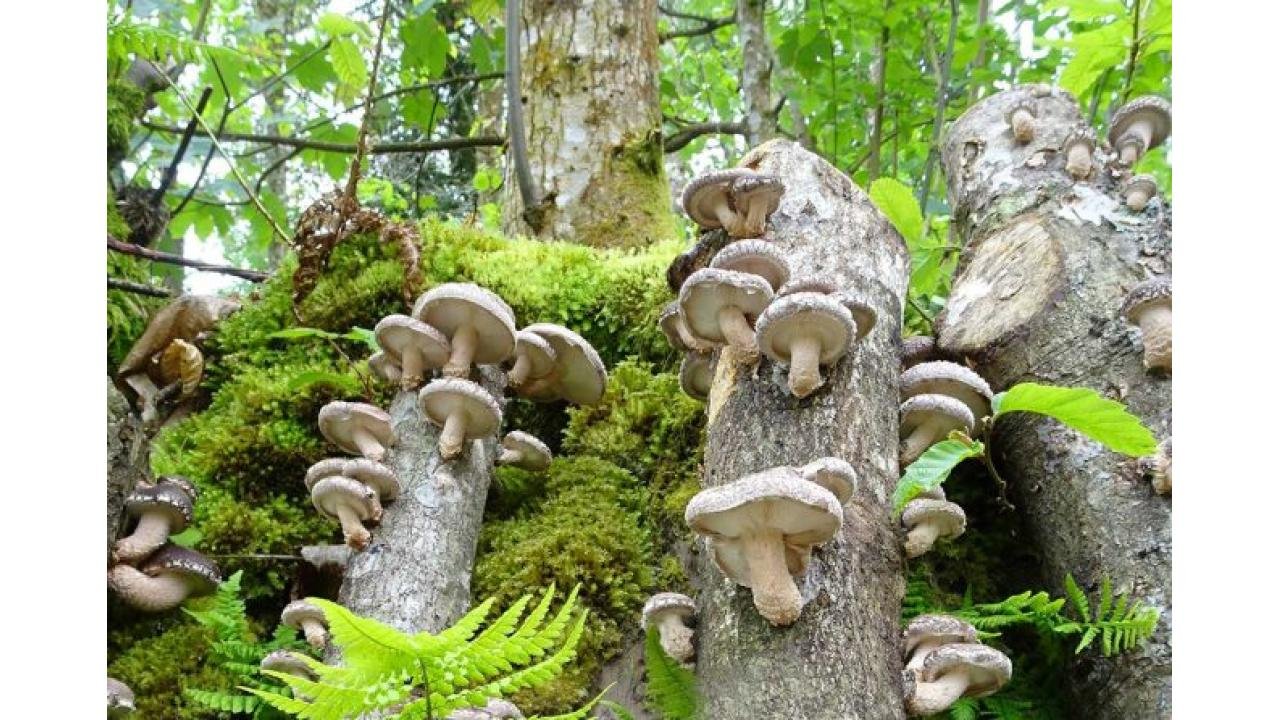
Mushrooms with other fungi are something special in the livingworld, being neither plants nor animals. They have been placed in a kingdom oftheir own called Myceteae. The word mushroom may mean different things todifferent people “Mushroom is a macrofungus with a distinctive fruiting body,which can be either epigeous or hypogeous”. The most common type of mushroomsis umbrella shaped with a pileus (cap) and a stripe (stem) i.e. Lentinula edodes. Accordingly mushrooms can be grouped intofour categories: (1) those which are fleshy and edible fall into the ediblemushroom category, e.g., Agaricusbisporus; (2) mushrooms which are considered to have medicinalapplications, are referred to as medicinal mushrooms, e.g. Ganoderma lucidum; (3) those which are proven to be, or suspectedof being poisonous are named as poisonous mushrooms, e.g., Amanita phalloides; and (4) a miscellaneous category which includesa large number of mushrooms whose properties remain less well defined, whichmay tentatively be grouped together as ‘other mushrooms’. Mushrooms lack true roots. This is affected bytheir tightly interwoven thread-like hyphae, which also colonise thesubstrates, degrade their biochemical components, and siphon away thehydrolysed organic compounds for their own nutrition.
Mushroom as Nutritional food:
The moisture content of fresh mushrooms varies within the range of70- 95% depending upon the harvest time and environmental conditions, whereasit is about 10-13% in dried mushrooms. The protein content of the cultivatedspecies ranges from 1.75 to 5.9 % of their fresh weight. The protein content ofedible mushrooms in general is about twice that of onion (1.4 %) and cabbage(1.4%), and four times and 12 times those of oranges (1.0 %) and apples (0.3%), respectively. In comparison, the protein content of common meats is asfollows: pork, 9-16 29 %; beef, 12-20 %; chicken, 18-20 %; fish, 18 -20 %; andmilk, 2.9- 3.3 %. On a dry weight basis, mushrooms normally contain 19 -35 %protein, as compared to 7.3 % in rice, 12.7 % in wheat, 38.1 % in soybean, and9.4 % in corn. Therefore, in terms of the amount of crude protein, mushroomsrank below animal meats. Furthermore, mushroom protein contains all the nineessential amino acids required by human. In addition to their good proteins,mushrooms are a relatively good source of the following individual nutrients:fat, phosphorus, iron, and vitamins including thiamine, riboflavin, ascorbicacid, ergosterine and niacin. They are low in calories, carbohydrates andcalcium. The total lipid content is found between 0.6 and3.1 % of the dry weight in the commonly cultivated mushrooms. In addition to nutritional value, mushrooms have someunique colour, taste, aroma, and texture characteristics, which attract theirconsumption by human.
MedicinalProperties of Mushrooms:
There has been a great upsurge in activities related to the use ofmushroom products for medicinal purposes in recent years. Mushrooms produceseveral biologically active compounds that are usually associated with the cellwall. Most notably, a group of polysaccharides comprising high molecular weightsugar polymers has been reported to contribute to their immune enhancing andtumour retarding effects. It has been reported that the anti-tumour andanti-cancer effects of the polysaccharides are based on the enhancement of thebody’s immune systems, including activated macrophages, natural killer cells,cytotoxic T cells, and their secretory products, such as the tumour necrosisfactor, reactive nitrogen and oxygen intermediates, and interleukins, ratherthan direct cytocidal effects. Another group of medicinal compounds found in Ganoderma spp. are triterpenoids,steroid-like compounds, which contribute cytotoxic, hepatoprotective, andhypolipidmic influence on platelet aggregation, inhibition ofangiotensine-converting enzyme, and inhibition of histamine release. Lectins,another group of mushroom bioactive compounds, are proteins or glycoproteinswith specific binding sites for sugars, which are not antibodies or enzymes.These have become useful tools in structural studies of the cell surface,oligosaccharides and/or carbohydrate moieties of glycoproteins. Some lectinshave been shown to have anti-tumour and immunomodulatory activities. Otherlectins preferentially agglutinate mammalian cells that have been transformedby oncogenic viruses or by chemical carcinogens, as well as spontaneouslytransformed cells. These and related findings indicate that studies withlectins may lead to a better understanding of cancer.
Discussion